How To Build Your Christian Author Platform Before Publishing
Build a Christian author platform before publication by developing genuine reader relationships, growing an email list, sharing useful content, and creating sustainable ways to reach the audience your future book is meant to serve.

An author platform is not simply a follower count.
It is the collection of relationships, channels, content, and communication methods that allow you to reach people who are genuinely interested in what you write.
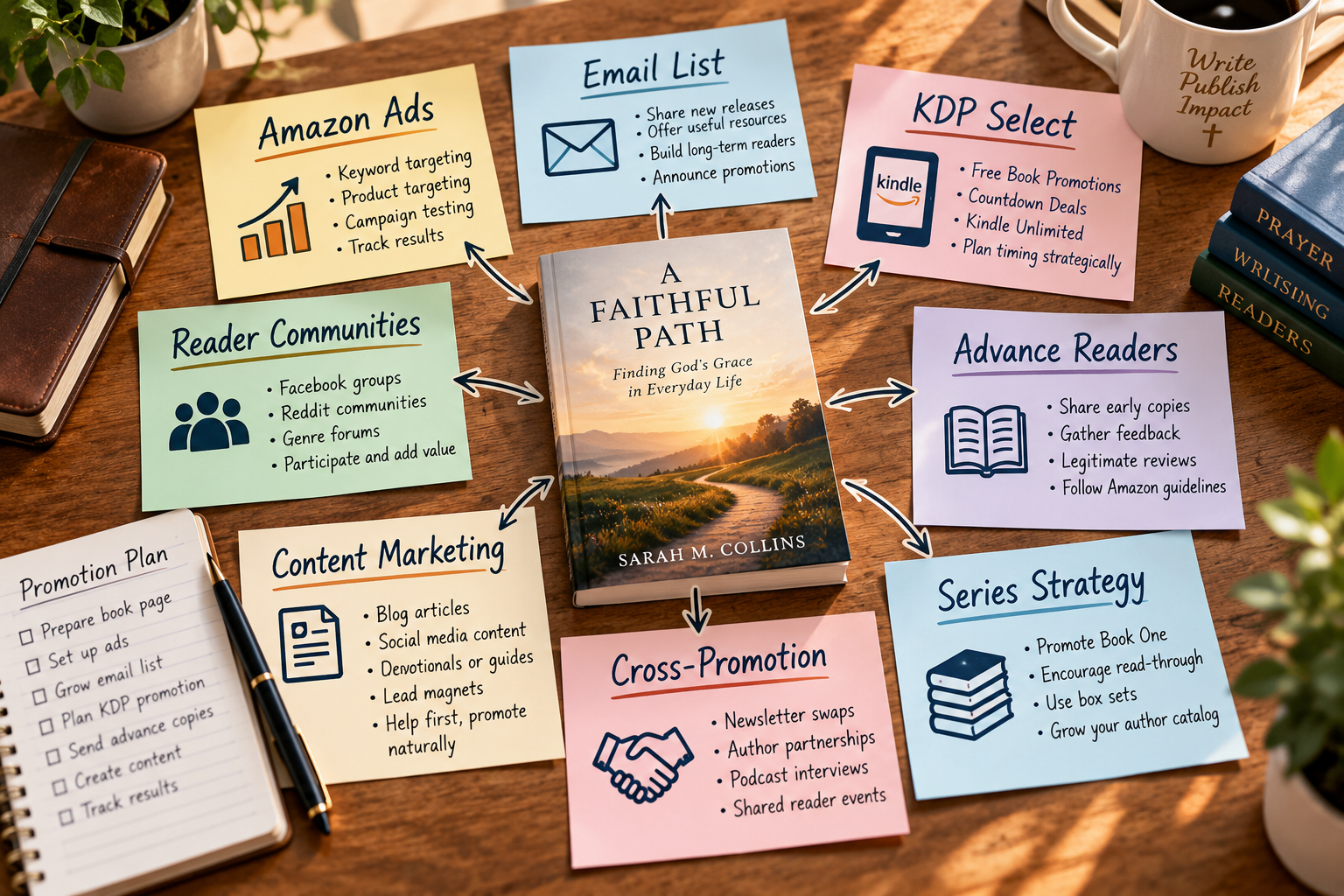
For a Christian author, that platform might include an email list, website, social media presence, church or ministry relationships, speaking opportunities, podcast appearances, articles, teaching, reader communities, or recurring faith-based content.
You do not need all of them.
The goal is to build a reliable connection with the readers your future book is intended to serve.
And the best time to begin is before you need to sell them a book.
Start With the Reader, Not the Platform
It is tempting to begin with a question such as:
Should I be on Facebook, Instagram, YouTube, or LinkedIn?
That is not the first question.
Start with:
Who am I trying to reach?
A Christian novelist, devotional writer, Bible study author, pastor, children’s author, and Christian business writer may all need very different platforms.
Imagine you are writing devotionals for women navigating major life transitions. Your audience may respond well to email, thoughtful social content, church women’s ministries, podcasts, and recurring devotional articles.
An author writing Christian fantasy for teenagers may need a completely different approach.
The platform should follow the reader.
Do not build an audience somewhere simply because other authors say you are supposed to be there.
Choose a Few Channels You Can Maintain Well
You do not need a presence everywhere.
Trying to maintain five social platforms, a blog, a podcast, a newsletter, and a YouTube channel while writing a book can quickly become another reason the manuscript never gets finished.
Choose a manageable combination.
For many authors, that might mean:
- an author website
- an email list
- one primary social platform
- occasional appearances or contributions elsewhere
The exact combination matters less than consistency.
Choose channels that fit both your audience and your strengths.
If you enjoy writing but dislike video, a newsletter and articles may make more sense than forcing yourself to publish short videos every day.
If you are already teaching, speaking, or leading groups, those relationships may be more valuable than starting an entirely new social presence.
A sustainable platform usually grows better than an ambitious platform that disappears after three months.
Build an Email List Early
Social media can help readers discover you, but an email list gives you a more direct way to remain connected.
Algorithms change. Platforms rise and fall. Organic reach can increase or disappear without warning.
An email subscriber has intentionally given you permission to communicate with them.
That makes email especially valuable for authors.
Your list does not need to begin with thousands of subscribers.
Start by offering something useful to the type of reader you hope to serve.
A devotional author might offer a short devotional collection.
A Bible study writer might offer reflection questions or a printable study guide.
A Christian parenting author might create a short practical resource for families.
The best lead magnet is not simply something free. It should introduce readers to the kind of value they can expect from you in the future.
Then communicate consistently.
Do not build a list for six months and contact subscribers only when you suddenly have a book to sell.
Relationships require continuity.
Give Readers Useful Content Before Asking Them to Buy
Your platform should demonstrate why someone would want to keep hearing from you.
That usually means publishing useful content before the book launches.
You might share:
short devotionals
articles
reading recommendations
research insights
behind-the-scenes observations
questions for reflection
short teaching pieces
author updates
selected lessons from your subject area
The purpose is not to give away the entire book.
It is to demonstrate your perspective, usefulness, and voice.
A devotional writer who regularly publishes meaningful reflections gives potential readers a reason to trust that a future devotional book may also be worth reading.
A Christian nonfiction author who consistently helps readers understand a particular subject demonstrates credibility long before asking for a sale.
Useful content builds familiarity.
Familiarity can eventually become trust.
Let Your Platform Help You Understand Your Readers
Building an audience before publication has another advantage.
It gives you information.
Pay attention to what people respond to.
Which articles generate thoughtful replies?
Which email topics lead subscribers to write back?
Which questions appear repeatedly?
What problems do readers describe in their own words?
What subjects create conversation rather than passive likes?
Those signals can improve your writing.
They may reveal that readers care deeply about a topic you planned to mention only briefly. They may show that an explanation you thought was obvious actually needs more attention.
Audience feedback should not control everything you write, but it can help you understand the people you hope to serve.
That is much more valuable than guessing what readers want from a distance.
Build Relationships Beyond Your Own Audience
An author platform does not have to grow entirely through your own website or social accounts.
Other communities already exist.
Christian podcasts, ministries, churches, newsletters, conferences, blogs, writer organizations, reading groups, and online communities may serve audiences related to your subject.
Look for appropriate ways to contribute.
You might write a guest article, appear on a podcast, teach a workshop, participate in a panel, contribute to a ministry publication, or collaborate with another writer.
Approach these opportunities as relationships, not shortcuts.
Do not contact someone simply because you want access to their audience.
Understand their work first.
Offer something genuinely useful.
A strong collaboration serves their readers as well as your own goals.
That approach takes longer than sending mass promotional messages, but it also creates more meaningful connections.
Make Your Website the Home of Your Author Platform
Social profiles are useful, but your website should become the central place where readers can learn more about you and your work.
An author website does not have to be complicated.
At minimum, it should make several things easy to understand:
Who are you?
What do you write about?
Who do you write for?
How can someone join your email list?
What books or resources are available?
How can someone contact you?
As your publishing work grows, the site can also include articles, media appearances, speaking information, downloadable resources, book pages, and other material.
Think of social media as one way people discover you.
Think of your website as the place where your publishing identity lives.
Use Christian Community Relationships Thoughtfully
Christian authors may have access to communities that naturally connect with their subject.
These might include churches, Bible study groups, ministry organizations, Christian schools, homeschool communities, conferences, retreats, or denominational networks.
Those relationships can become valuable parts of an author platform.
But they should be handled carefully.
A ministry relationship is not simply a marketing asset.
Do not approach every pastor, church group, or Christian organization as a potential distribution channel.
Begin with service and genuine connection.
If your book or content later becomes useful to that community, promotion can arise naturally.
Trust is particularly important in Christian publishing because readers may be evaluating not only the usefulness of your work but also your credibility and integrity.
Protect that trust.
Create a Launch Team From Genuine Readers
As publication approaches, some of your most engaged readers may be willing to help introduce the book.
That group is often called a launch team.
A launch team might:
read an advance copy
provide feedback
share the book with appropriate friends or communities
participate in launch events
share approved promotional material
leave an honest review after publication
The key word is honest.
Do not pressure readers to leave positive reviews. Do not tell them what rating to give. Follow the review policies of the retailer or platform where the book is sold.
Your strongest launch-team members are usually not random people recruited at the last minute.
They are readers who already understand your work and want to see the book succeed.
That is another reason to begin building relationships before launch week.
Measure Engagement, Not Just Audience Size
Large numbers can look impressive while telling you very little about whether people care about your work.
Pay attention to meaningful engagement.
For email, that may include opens, clicks, replies, unsubscribes, and which topics generate the strongest response.
For your website, look at which articles attract readers, which pages lead to newsletter signups, and what subjects keep people exploring.
For social media, comments, saves, meaningful conversations, and website visits may tell you more than follower totals alone.
Do not become obsessed with every small fluctuation.
Look for patterns.
If articles about devotional writing consistently generate more subscriptions than unrelated publishing updates, that tells you something useful about your audience.
Use data to improve your decisions, not to define your worth as a writer.
Keep Writing the Book
Platform building can easily become productive procrastination.
You can spend hours designing graphics, checking analytics, writing posts, improving your website, and answering comments while avoiding the manuscript itself.
The platform exists to support your writing career.
The writing career does not exist to feed the platform.
Set boundaries.
Decide how much time you will devote to audience building and how much belongs to the manuscript.
A modest platform surrounding a finished, worthwhile book is far more valuable than an impressive social presence surrounding a manuscript that never gets completed.
Build Trust Before You Need Attention
The strongest reason to build an author platform early is not that every publisher demands a particular number of followers.
It is that relationships take time.
Someone may read one article today, subscribe next month, reply to an email later, and eventually become a reader of your book.
That progression cannot be manufactured during launch week.
Serve readers before asking them to buy.
Share useful ideas.
Answer genuine questions.
Show up consistently.
Let people learn what kind of writer you are.
Then when the book arrives, you are not introducing yourself and asking for a sale in the same breath.
You are offering something new to people who already understand why your work matters.
Frequently Asked Questions
How early should I start building an author platform?
Earlier is generally better, but there is no required number of months or years. Begin when you have a clear understanding of the audience you hope to serve. Even a small platform can become valuable when it is built consistently over time.
Do I need a large following before approaching a publisher?
Not necessarily. Platform importance varies by publisher, genre, and type of book. It can be particularly relevant for nonfiction, where an author’s expertise and ability to reach readers may be part of the publishing decision. Strong writing and a compelling book concept still matter.
Should I focus on email or social media?
They serve different purposes. Social platforms can help readers discover you, while email provides a more direct ongoing relationship. Many authors benefit from using social media for discovery and email for deeper connection.
What should I share before my book is published?
Share material that genuinely serves the audience your book is intended for. Articles, devotionals, useful observations, teaching, resources, questions, and selected behind-the-scenes material can all work when they fit your subject and voice.
Do Christian authors need a website?
A website is highly useful because it gives you a central place for your author identity, books, email signup, articles, contact information, and other resources. It also reduces your dependence on any single social platform.
What matters more, followers or engagement?
Neither number tells the whole story, but meaningful engagement is often more informative than follower count alone. A smaller audience that reads, replies, subscribes, and shares your work may be more valuable than a much larger passive audience.
Start With One Meaningful Connection
Building a Christian author platform does not require becoming an influencer.
It requires becoming consistently useful to the people you hope to serve.
Choose your audience.
Create a dependable way to stay connected.
Share material worth reading.
Build genuine relationships.
Pay attention to what helps.
And keep writing the book.
Your platform does not need to become enormous before publication.
It needs to become real.