What to Do When Amazon Blocks or Rejects Your KDP Book
If Amazon rejects or removes your KDP book, do not guess. Learn how to review rights, metadata, AI disclosure, public-domain issues, formatting, quality problems, and the appeal process.

A KDP book can be rejected during review, removed after publication, or flagged for changes.
When that happens, the worst response is to panic and start changing everything at once.
The better approach is to identify what Amazon is actually objecting to, document the issue, correct it carefully, and respond through the proper KDP process.
For Christian authors, the most common areas worth checking are:
- copyright and publishing rights
- Scripture permissions
- public-domain status
- AI disclosure
- metadata accuracy
- cover and image rights
- content quality
- formatting problems
- reader experience
A blocked or rejected title does not automatically mean your entire publishing account is lost.
It means you need to diagnose the problem correctly.
First, Determine What Kind of Problem You Have
Not every KDP issue is the same.
Your book may be:
- rejected before publication
- returned for changes
- removed after going live
- flagged for a quality problem
- questioned over rights or permissions
- held while Amazon requests more information
Those situations require different responses.
Start by reading the KDP email carefully.
Do not skim it.
Look for:
- the title affected
- the ASIN or book identifier
- the policy area mentioned
- any specific page, image, metadata field, or content issue
- whether Amazon is asking for changes
- whether Amazon is asking for documentation
- whether an appeal option is available
Write down exactly what the message says before making any changes.
Do Not Assume the Manuscript Is the Problem
The issue may not be inside the book at all.
KDP content guidelines apply to more than manuscript text.
Problems can involve:
- title
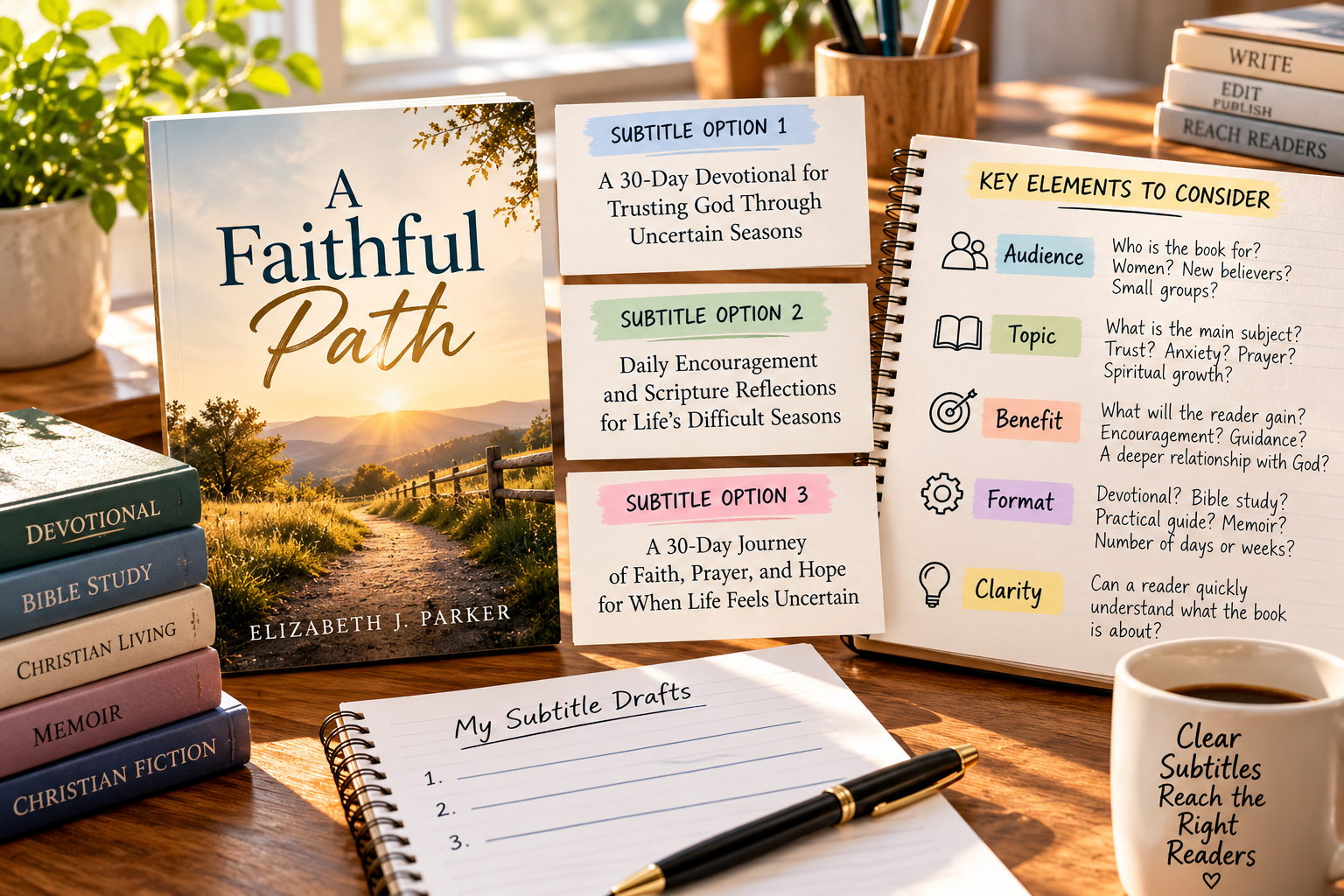
- subtitle
- cover
- description
- keywords
- categories
- author information
- series information
- images
- rights
- manuscript content
So if Amazon flags the book, review the entire product.
A perfectly acceptable manuscript can still run into problems because the listing itself is inaccurate or misleading.
Check Rights and Permissions First
Rights problems deserve immediate attention because they can be serious.
Ask:
Do I own this material?
Do I have permission to publish it?
Can I document that permission?
Review:
- manuscript text
- illustrations
- photographs
- stock images
- quotations
- translations
- cover elements
- logos
- supplemental material
If Amazon asks for proof of rights, provide documentation rather than a general explanation.
Useful documentation may include:
- contracts
- licenses
- permission letters
- copyright registrations
- invoices
- contributor agreements
- correspondence from the rights holder
Keep those records organized before a problem occurs.
Christian Authors Should Recheck Scripture Permissions
If your book uses substantial Scripture quotations, verify that you followed the requirements for the translation you used.
Check:
- quotation limits
- attribution wording
- copyright notice
- permission requirements
- translation abbreviation
- percentage of the finished work made up of quoted Scripture
A Bible study or devotional can be excellent editorially and still create a permissions problem if the quotation rules were not followed.
Do not treat Scripture permissions as a formality.
They are part of the publishing process.
Review AI Disclosure
If AI generated any actual text, images, or translations that appear in the book, KDP currently requires disclosure.
That includes:
- manuscript text
- cover artwork
- interior illustrations
- translated text
If you created the content yourself and used AI only to edit, refine, brainstorm, critique, or error-check it, that is generally treated as AI-assisted rather than AI-generated.
If a blocked title contains generated material, confirm that the disclosure information you provided is accurate.
Also review the generated content itself.
Disclosure does not excuse copyright, quality, accuracy, or customer-experience problems.
Public-Domain Books Need Special Review
If the book is based on public-domain material, confirm two separate things.
First:
Is the work actually public domain in the marketplace where you are publishing it?
Second:
Does your edition meet Amazon’s requirements?
When a free version is already available, Amazon expects a differentiated edition rather than another essentially identical copy.
Differentiation may come from:
- original translation
- original annotations
- original historical context
- original study material
- original illustrations
If Amazon asks you to prove public-domain status, be prepared to document it.
Do not rely on “I found it on a public-domain website” as your entire rights analysis.
Check the Cover and Interior Images
Image rights cause problems because authors sometimes assume that purchased images can be used anywhere.
Review each major image.
Ask:
- Where did it come from?
- What license applies?
- Does the license allow commercial book use?
- Did I follow attribution requirements?
- Is the image modified in a way the license permits?
- Does it contain a protected logo or recognizable branded element?
- Does it include a person whose image rights may matter?
For AI-generated images, also confirm that the AI disclosure was completed correctly.
The safest practice is to keep a license record for every important visual asset used in the book.
Review the Metadata Carefully
Metadata problems are often easier to fix than manuscript problems.
Check:
- title
- subtitle
- author name
- contributors
- description
- keywords
- categories
- series name
- edition information
The title should match the actual title of the book.
The description should accurately represent the content.
Keywords should relate to the book.
Categories should fit the actual subject and audience.
Do not add unrelated search terms simply to attract traffic.
Do not use another author’s name or title to gain visibility.
Do not use promotional claims that are not supported.
Clean metadata helps both Amazon and the reader understand the product.
Quality Problems Can Also Trigger Action
A book does not need to violate copyright to create problems.
KDP also cares about reader experience.
Quality concerns can include:
- missing content
- duplicated content
- poor translation
- unreadable formatting
- broken links
- missing images
- excessive repetition
- misleading descriptions
- very low-value content
- content that does not match what the product page promises
For ebooks, use the quality tools available in your KDP account.
For print books, review the files and physical proof carefully.
A technically uploadable book is not necessarily a publication-ready book.
Do Not Republish the Same Problem Under a New Title
If Amazon rejects or removes a title, do not simply change the title, change the cover, and upload the same problematic content again.
That does not resolve the underlying issue.
Instead:
- Identify the actual concern.
- Correct the source file or metadata.
- Save the revised version clearly.
- Verify the correction.
- Resubmit only when the issue has genuinely been addressed.
Repeatedly uploading the same unresolved problem is not a good recovery strategy.
Use KDP Support When the Message Is Unclear
Sometimes the notice will not give you enough information.
In that case, contact KDP support from your account.
Keep your message concise.
Include:
- book title
- ASIN or ISBN
- date of the notice
- policy area referenced
- what you believe the issue may be
- what clarification you need
Do not send a long emotional explanation.
Ask a specific question.
For example:
The notice references metadata. Can you identify which metadata field needs correction?
That is much easier for support to answer than:
Why are you doing this to my book?
If Amazon Requests Documentation, Send Documentation
Do not answer a rights request with reassurance.
If Amazon asks whether you have permission, show the permission.
If it asks for evidence of public-domain status, provide evidence.
If it asks about a translation, provide the relevant rights documentation.
If it asks about image use, provide the applicable license.
Your response should make the reviewer’s job easier.
Clear documentation is more persuasive than explanation alone.
Keep a Record of Every Change
Create a simple incident record.
Include:
- date of notice
- book affected
- issue cited
- original file version
- revised file version
- screenshots
- emails
- licenses
- permissions
- changes made
- date resubmitted
- final outcome
This becomes valuable if a similar issue appears later.
It also prevents you from forgetting exactly what changed between versions.
Appeal When You Believe the Decision Is Wrong
Amazon provides an appeal process for removed content.
An appeal is most useful when:
- the cited issue does not apply
- Amazon misunderstood the material
- you can prove you have rights
- metadata was interpreted incorrectly
- a quality flag does not reflect an actual defect
- you have strong documentation
A good appeal should be focused.
State:
- what decision you are appealing
- why you believe it is incorrect
- what evidence supports your position
- what documentation you are providing
Avoid speculation about Amazon’s algorithms.
Stay with facts.
If the Problem Is Real, Correct It Instead of Arguing
Not every removal deserves an appeal.
Sometimes Amazon is right.
If you discover that:
- an image license was insufficient
- metadata was misleading
- a translation lacked permission
- public-domain differentiation was inadequate
- AI-generated content was not disclosed
- the description overstated the book
- the file contained serious quality problems
fix the issue.
Publishing compliance is not about winning an argument.
It is about getting the book into a legitimate, accurate, reader-ready state.
Review Related Books in Your Catalog
If the problem came from something you reuse across multiple books, check the rest of your catalog.
Examples include:
- the same image license
- the same metadata template
- the same series wording
- the same Scripture permission issue
- the same AI workflow
- the same public-domain source
- the same formatting template
Correcting one title while leaving the identical issue in five others does not solve the broader problem.
Use the incident as a quality-control signal.
Do Not Assume One Rejection Means Account Termination
The old version of this article was too alarmist here.
A book rejection, quality notification, or removal does not automatically mean your entire KDP account is being terminated.
Amazon can reject or remove individual titles and allow authors to correct or appeal issues.
Serious or repeated violations can affect account standing, so every notice should be taken seriously.
But there is no reason to treat every isolated problem as an immediate account-ending event.
Diagnose first.
Respond accurately.
Build a Prepublication Compliance Folder
The easiest recovery is the problem you prevent.
For each book, keep:
- final manuscript
- cover source file
- stock image licenses
- illustration permissions
- Scripture permissions
- translation rights
- contributor agreements
- public-domain research
- AI notes
- final metadata
- ISBN information
- proof copy notes
This turns compliance into part of production rather than an emergency response.
Frequently Asked Questions
Why did Amazon reject my KDP book?
Common reasons can involve rights, metadata, content guidelines, public-domain requirements, AI disclosure, formatting, or poor customer experience. Read the notice carefully and identify which area Amazon is referencing before making changes.
Can Amazon remove a book after it has already been published?
Yes. A book can be reviewed again after publication if Amazon receives a complaint, identifies a potential guideline issue, or detects a quality problem.
Can I appeal a KDP book removal?
Yes. Amazon provides an appeal process for removed content. Appeals are strongest when they are factual and supported by documentation.
Should I upload the book again under another title?
Not if the underlying problem has not been corrected. Changing metadata does not resolve a rights, content, quality, or disclosure issue.
What should I do if Amazon asks for proof of rights?
Provide documentation such as licenses, contracts, permission letters, or other records showing that you have the right to publish the material.
Can a public-domain book be rejected?
Yes. Amazon may ask for proof that the work is actually in the public domain, and undifferentiated editions may not be accepted when a free version is already available.
Can AI-generated content cause a KDP issue?
AI-generated content itself is allowed, but KDP requires disclosure of AI-generated text, images, and translations. All generated material must also comply with other content and intellectual-property rules.
Can formatting problems cause a book to be blocked?
Yes. Poor customer experience and quality problems can lead to warnings, required corrections, or removal.
Fix the Problem, Not Just the Listing
When a KDP title is rejected or removed, your goal is not to get around the review.
Your goal is to understand why the book failed review and correct the real issue.
Read the notice.
Review the entire product.
Check rights.
Check Scripture permissions.
Check AI disclosure.
Check metadata.
Check quality.
Document your evidence.
Then respond or appeal with facts.
A disciplined response gives you a much better path forward than guessing at hidden triggers.